Embroidery has always been one of the most recognizable ways to decorate apparel. It creates texture, dimension, and a premium handcrafted appearance that conventional flat printing cannot easily reproduce.
Digital printing offers a different kind of creative freedom. It makes it possible to reproduce detailed artwork, complex colors, gradients, and photographic elements directly on garments.
But what happens when you combine the two?
Embroidery + DTG printing brings physical texture and digital color together in one garment design.
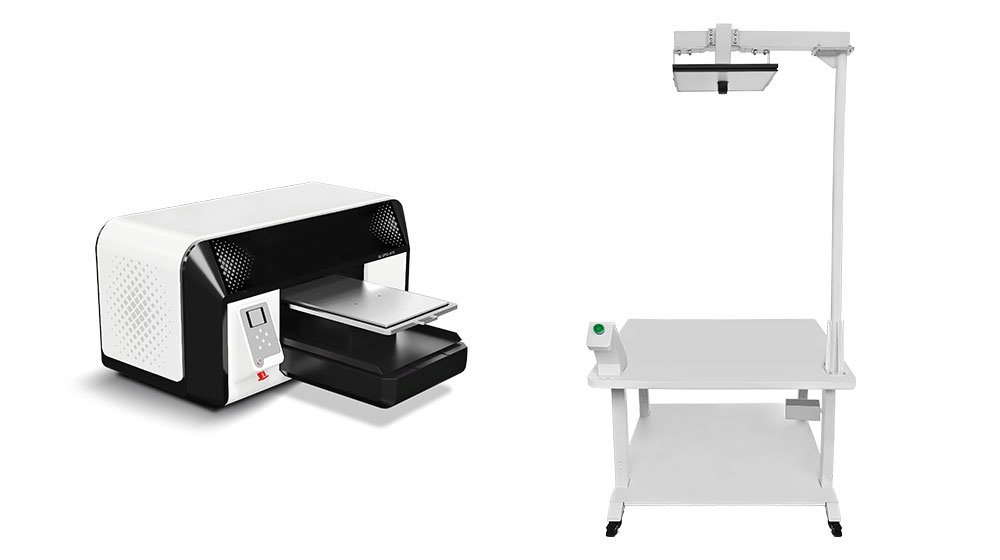
With a visual positioning DTG printer such as the SL-X1S, apparel decorators can explore a new production workflow that combines embroidered elements with digitally printed graphics. Instead of choosing between embroidery and printing, designers can use both processes as part of the same creative concept.
What Is Embroidery + DTG Printing?
Embroidery + DTG printing is a mixed apparel-decoration workflow that combines embroidered elements with direct-to-garment digital printing.
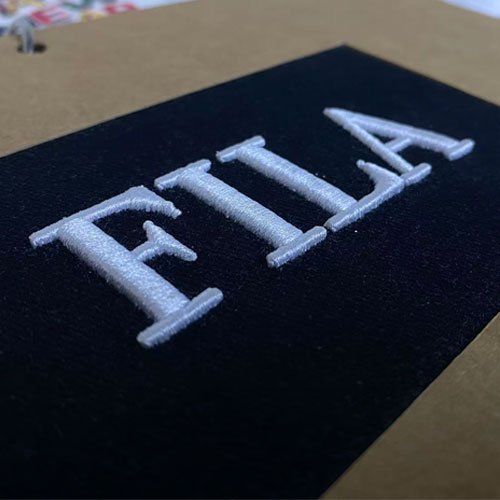
Embroidery provides the dimensional structure of the design. Thread rises above the garment surface and creates a tactile effect that becomes part of the finished product.
DTG printing adds another layer of creative possibilities through digitally printed artwork.
The two techniques can therefore play different roles in the same design:
- Embroidery adds texture and dimension
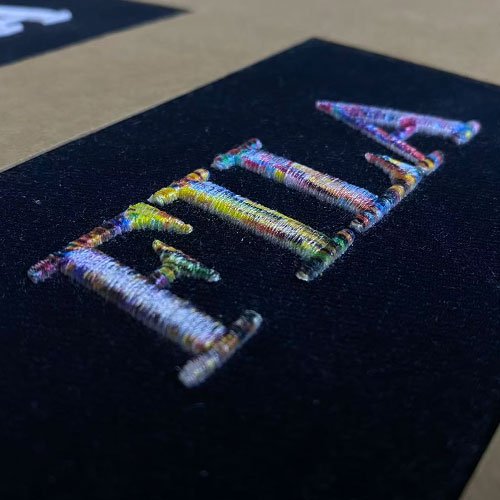
- DTG adds color and graphic detail
- Visual positioning helps coordinate the two decoration processes
The result is apparel that combines the physical character of embroidery with the flexibility of digital printing.
For fashion brands, custom apparel businesses, print shops, and product developers, this creates opportunities to experiment with designs that are difficult to achieve using embroidery or DTG alone.
Why Combine Embroidery with Digital Printing?
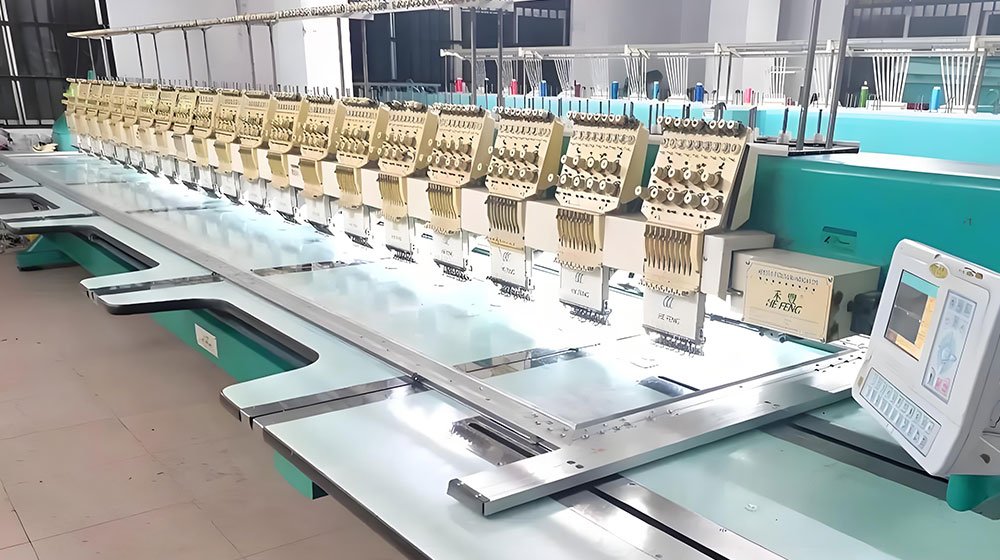
Traditional embroidery is excellent for logos, lettering, patches, and textured graphics. However, designs that require numerous colors, subtle gradients, or complex visual details can become increasingly challenging when everything must be reproduced with thread.
DTG printing approaches the problem differently.
Digital artwork can contain detailed illustrations, tonal transitions, and multiple colors without requiring every visual element to become a separate embroidery component.
Combining these processes allows designers to decide which parts of a graphic should have physical texture and which parts should be created digitally.
Imagine an embroidered outline enhanced with digitally printed colors. A textured embroidered graphic can become the foundation for additional printed artwork. A fashion design can combine thread, ink, garment color, and negative space as parts of the same composition.
This changes the design question from:
“Should I embroider or print this design?”
to:
“How can embroidery and digital printing work together?”
Visual Positioning Makes Mixed Decoration More Practical
Combining two decoration technologies introduces an important challenge: positioning.
The printed graphic needs to be placed according to the intended decorated area. Poor positioning can make an otherwise excellent design appear misaligned.
This is where visual positioning becomes particularly valuable.
The SL-X1S DTG printer incorporates a visual positioning system designed for multi-process applications, giving operators greater flexibility when working with designs that require specific print placement.
This capability is particularly relevant when DTG printing becomes part of a larger apparel-decoration workflow rather than a standalone printing process.
How Does Embroidery + DTG Printing Work?
The exact production process depends on the garment, artwork, embroidery construction, ink, and finishing requirements. A typical workflow can be understood in four stages.
Step 1: Create the Embroidery
Start by producing the embroidered element on the garment.
The embroidery can function as a finished visual component or as a textured foundation that will later interact with the digitally printed artwork.
The designer should consider the final combined appearance from the beginning rather than treating embroidery and printing as two unrelated decorations.
Step 2: Prepare the Digital Artwork
Next, prepare the artwork that will be digitally printed.
Think carefully about how the printed areas will interact with the embroidery. Some printed elements may complement the embroidered shape, while others may extend beyond it to create a larger composition.
This is where digital printing provides significant creative freedom.
Step 3: Position and Print
Place the decorated garment on the DTG printing platform and position the digital artwork according to the intended print area.
With the SL-X1S visual positioning workflow, the printing process can be adapted to applications requiring more deliberate placement.
Once positioned, the garment can move into the digital printing stage.
The SL-X1S supports white and color simultaneous printing, providing additional flexibility for customized garment production.
Step 4: Cure and Finish
After printing, complete the appropriate curing and finishing process according to the ink, textile, and production requirements.
The finished garment now combines two distinct forms of decoration:
the dimensional texture of embroidery and the visual flexibility of digital printing.
What Can You Create with Embroidery + DTG?
One of the biggest advantages of combining embroidery and digital printing is application flexibility.
The SL-X1S is positioned for personalized customization, sample development, one-piece printing, and small-batch production. This makes the workflow particularly interesting for businesses that need to develop differentiated products without relying exclusively on large production runs.
Potential applications include:
Custom T-Shirts
Combine embroidered logos, lettering, or graphic elements with digitally printed illustrations and colors.
This can help transform a standard printed T-shirt into a more distinctive mixed-media product.
Streetwear Hoodies
Hoodies provide a large creative surface for combining texture and graphics.
Embroidery can create dimensional focal points while digital printing expands the design around those elements.
Denim Jackets
Denim naturally works well with decorative techniques.
Combining embroidery and digital artwork can create distinctive jacket backs, fashion graphics, personalized pieces, and limited collections.
Jeans
Mixed decoration can also be applied creatively to compatible denim apparel, opening opportunities for personalized and fashion-oriented products.
Fashion Samples
Designers can experiment with combinations of embroidery and digital artwork when developing new garments.
Instead of committing immediately to large production quantities, sample development allows different creative directions to be evaluated first.
Limited-Edition Apparel
Mixed decoration is especially suitable for products where differentiation matters more than mass-production simplicity.
Streetwear drops, artist collaborations, branded merchandise, event apparel, and limited fashion collections are potential examples.
Why the SL-X1S Is Designed for Creative Garment Printing
The SL-X1S is more than a standard garment printer. Its feature set is designed to support flexible textile-printing workflows.
Visual Positioning System
The visual positioning system is designed for multiple processes and helps support applications requiring more flexible print placement.
Dual Epson i3200 Printheads
The SL-X1S uses two Epson i3200 printheads, with an i3200HD option listed in the product specifications.
The dual-printhead architecture is designed to balance printing quality and production efficiency.
White + Color Simultaneous Printing
White and color simultaneous printing simplifies the digital production workflow and provides flexibility when producing colorful graphics on compatible garments.
400 × 500 mm Printing Area
A maximum printable format of 400 × 500 mm provides practical working space for T-shirts, hoodies, denim apparel, and other customized textile products.
Up to 25 mm Printing Thickness
The SL-X1S supports a maximum printing thickness of 25 mm, providing additional flexibility for compatible textile applications.
Automatic Ink Circulation
White ink management is an important part of DTG printer operation.
The SL-X1S incorporates an adjustable automatic ink circulation system designed to reduce white ink blockage and simplify routine production.
It also includes one-click electronic ink suction for printhead cleaning and an intelligent ink-shortage voice reminder.
Designed for Personalized and Small-Batch Production
The growth of personalized apparel has changed how many printing businesses think about production.
Not every customer needs hundreds of identical garments.
Some need ten.
Some need a sample.
Some need a limited collection.
And some need only one personalized piece.
The SL-X1S is designed around this more flexible production model, supporting personalized customization, small-batch production, one-piece printing, and sample development.
That makes embroidery + DTG particularly interesting for businesses serving customers who value originality and customization.
Instead of competing only on production volume, decorators can focus on creating products with greater visual differentiation.
Embroidery Texture Meets Digital Color
The real value of embroidery + DTG printing is not simply adding another production step.
It is about giving designers another visual language.
Embroidery contributes texture, depth, and physical structure.
Digital printing contributes color, detail, and graphic flexibility.
Used together, they can turn an ordinary garment into something much more distinctive.
A tiger does not need to be completely embroidered. Selected areas can provide dimensional thread texture while digital printing creates the surrounding detail.
Typography can combine raised embroidered lettering with printed graphics.
Illustrations can move between thread and ink.
Fashion graphics can use the garment itself as part of the composition.
The objective is no longer simply to decorate a blank garment.
It is to create a product in which fabric, thread, ink, color, and texture work together as one design.
Who Can Benefit from Embroidery + DTG Printing?
This production concept can be particularly valuable for several types of businesses.
Custom apparel shops can expand beyond conventional printed T-shirts and offer more differentiated products.
Embroidery businesses can add digital color and graphic detail to their existing decoration capabilities.
DTG print shops can introduce texture and dimensional elements into selected product lines.
Fashion and streetwear brands can experiment with mixed-media garments for limited collections and product launches.
Print-on-demand businesses can explore higher-value personalized products instead of competing exclusively on standard printed apparel.
Product development teams can use mixed decoration when creating samples and evaluating new apparel concepts.
Is Embroidery + DTG Suitable for Small Orders?
Yes—small-run production is one of the areas where this concept can be particularly interesting.
Digital garment printing does not require every graphic element to be reproduced through a traditional large-batch printing setup. The SL-X1S is specifically positioned for personalized customization, small batches, sample development, and one-piece printing.
This creates opportunities for businesses serving:
- Personalized customer orders
- Fashion samples
- Small brand launches
- Limited-edition collections
- Event merchandise
- Creator merchandise
- Custom streetwear
- Product testing
Businesses can therefore use mixed decoration not only as a production technology but also as a way to develop more differentiated products.
Frequently Asked Questions
Can you print directly on embroidery?
Embroidery and digital printing can be combined as part of a mixed garment-decoration workflow. The suitability of a specific application depends on factors such as the embroidery construction, garment surface, print area, ink, artwork, and production setup.
The SL-X1S is specifically presented as supporting integrated embroidery and printing applications through its visual positioning capabilities.
What is a visual positioning DTG printer?
A visual positioning DTG printer provides additional assistance when placing digital artwork in relation to the intended printing area.
This is useful for customized and multi-process applications where the required graphic placement may be more complex than conventional centered garment printing.
What fabrics can the SL-X1S print?
According to the SL-X1S specifications, compatible textile applications include materials such as cotton, linen, silk, canvas, and denim.
Actual print results depend on the fabric, ink, pretreatment, artwork, and production process.
What is the SL-X1S maximum print size?
The SL-X1S has a specified maximum printable format of 400 × 500 mm.
Does the SL-X1S print white ink?
Yes. The SL-X1S supports white and color simultaneous printing and includes an automatic ink circulation system designed to help reduce white ink blockage.
Is embroidery + DTG only for T-shirts?
No.
Potential applications extend to T-shirts, hoodies, zipper hoodies, pocket hoodies, denim clothing, jeans, fashion samples, and other compatible customized textile products.
Bring Embroidery to Life with Digital Printing
Embroidery does not have to compete with digital printing.
The two processes can complement each other.
By combining embroidery texture, digital color, and visual positioning, apparel decorators can explore a new generation of customized products that go beyond conventional DTG printing or embroidery alone.
The SL-X1S Visual Positioning DTG Printer is designed to support this type of flexible production—from personalized garments and samples to small-batch fashion and creative apparel applications.
Ready to explore embroidery + DTG printing?
Tell us what products you want to create, your materials, and your production requirements.