When creating custom apparel, two decoration methods often stand out: DTG printing and embroidery.
Both can turn a blank garment into a branded, personalized, or fashion-focused product—but they create very different results.
DTG printing is ideal for designs that depend on color, gradients, illustrations, and fine graphic detail. Embroidery creates texture, dimension, and a distinctive stitched appearance.
So which one should you choose?
The answer depends on what you are producing, how your artwork is designed, the visual effect you want, and how you plan to manufacture it.
And increasingly, the question is no longer simply DTG vs embroidery.
With visual positioning technology, it is also possible to explore embroidery + DTG printing in the same design.
This guide explains the differences between DTG printing and embroidery, where each method performs best, and how combining them can create new opportunities for custom apparel.
What Is DTG Printing?
Direct-to-garment printing, or DTG printing, is a digital textile printing process that applies ink directly to a garment.
Instead of creating screens for individual colors, artwork is prepared digitally and reproduced through an inkjet printing system.
This makes DTG particularly useful for artwork containing:
- Multiple colors
- Detailed illustrations
- Fine lines
- Complex graphics
- Color transitions
- Personalized elements
DTG also fits naturally into customized and short-run production because the artwork is handled digitally.
The SL-X1S, for example, is positioned for personalized customization, one-piece printing, small-batch production, and sample development.
What Is Embroidery?
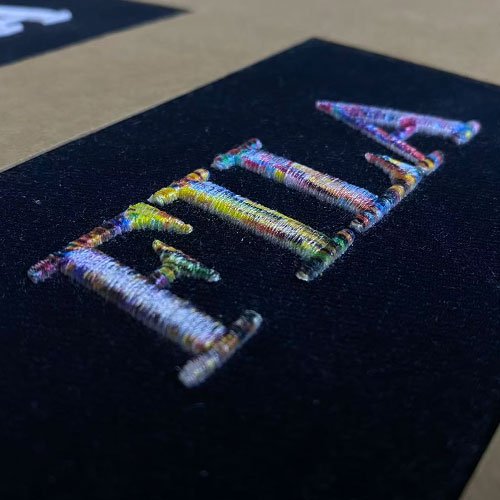
Embroidery creates a design by stitching thread into or onto a textile.
Instead of ink forming the visual image, the thread itself becomes part of the garment.
That creates one of embroidery’s most recognizable characteristics:
physical texture.
The finished design has dimensional structure that can be both seen and felt.
This makes embroidery popular for applications where texture and a stitched appearance are important parts of the product design.
Logos, lettering, badges, decorative elements, workwear, caps, jackets, hoodies, and fashion garments are common examples.
DTG Printing vs Embroidery: What’s the Difference?
Although both processes decorate clothing, they achieve that goal in fundamentally different ways.
| Feature | DTG Printing | Embroidery |
|---|---|---|
| Decoration Method | Digital textile ink | Thread |
| Surface Effect | Printed graphic | Raised, textured stitching |
| Detailed Artwork | Excellent potential | Depends on embroidery construction |
| Complex Colors | Highly flexible | Requires thread/color planning |
| Gradients | Well suited to digital artwork | More limited |
| Photographic Graphics | Better suited | Generally not the primary strength |
| Texture | Minimal physical dimension | Strong dimensional texture |
| Personalization | Highly flexible | Possible with embroidery setup |
| Small-Batch Production | Well suited | Depends on design and workflow |
| Best Visual Strength | Color & detail | Texture & dimension |
The important point is that these technologies are not simply substitutes for each other.
They have different visual strengths.
1. DTG Is Better for Complex Color and Graphic Detail
If your design contains illustrations, intricate details, numerous colors, or subtle tonal changes, DTG printing can provide significantly more graphic flexibility.
Because the artwork exists digitally, designers are not restricted to translating every visual element into thread.
Consider artwork containing a detailed animal illustration, typography, shadows, and colorful background graphics.
With DTG, those elements can remain part of one digital composition.
This makes DTG particularly attractive for:
Graphic T-shirts
Artist merchandise
Streetwear
Illustrated apparel
Personalized garments
Fashion graphics
The SL-X1S is designed around this type of digital textile workflow and specifies a maximum printing resolution of 720 × 1800 dpi.
2. Embroidery Is Better When Texture Is the Design
Sometimes color is not the most important part of a garment.
Texture is.
Embroidery physically changes the decorated surface. Thread introduces dimension, shadows, highlights, and a tactile quality that digital ink alone cannot reproduce.
This can make even relatively simple artwork visually distinctive.
An embroidered wordmark, for example, may contain fewer colors than a digitally printed graphic but have more physical presence.
That is why embroidery continues to be valuable for apparel where the stitched effect itself is part of the desired aesthetic.
3. DTG Gives Designers More Color Freedom
One practical difference between DTG vs embroidery is how each method approaches color.
In embroidery, colors are created through the selected threads.
As designs become more complex, thread choices and embroidery construction become increasingly important.
DTG approaches color digitally.
The SL-X1S is available with 5-color / 9-color configurations according to its specifications and supports white and color simultaneous printing.
This makes it possible to approach colorful apparel artwork without requiring every visual element to become a separate thread component.
For designers working with complex graphics, this can create considerably more freedom.
4. Embroidery Creates Physical Dimension
Digital printing creates an image on the garment surface.
Embroidery builds an image with thread.
That distinction matters.
Run your hand across an embroidered graphic and you can physically feel the design.
This dimensional quality can contribute to a more tactile appearance, particularly when the embroidery is intentionally incorporated into the overall garment design.
Rather than viewing this as a disadvantage of DTG, it is more useful to recognize it as a different creative tool.
And this leads to an interesting possibility:
What if you could use the texture of embroidery and the color flexibility of DTG together?
5. DTG Works Well for Personalized and Small-Batch Apparel
Customization is one of the areas where digital printing becomes especially useful.
Imagine an online clothing business selling the same basic garment with different names, artwork, graphics, or customer-specific designs.
Producing hundreds of identical pieces may not be the objective.
Instead, orders may arrive individually or in small quantities.
A digital workflow makes it possible to prepare and modify artwork according to each project.
The SL-X1S is specifically positioned for:
- Personalized customization
- Small-batch production
- One-piece printing
- Sample development
This makes DTG relevant not only for established print shops but also for fashion development, print-on-demand concepts, customized merchandise, and limited product releases.
6. Which Is Better for T-Shirts?
For highly detailed, colorful T-shirt artwork, DTG is often the more natural choice.
T-shirts provide a suitable canvas for digital illustrations, typography, artwork, merchandise graphics, and personalized designs.
However, embroidery can also be highly effective when the design calls for a textured logo, lettering, or a smaller dimensional element.
So the decision should come from the design itself.
Choose DTG when:
The graphic depends heavily on color, illustration, gradients, or fine visual detail.
Choose embroidery when:
Texture, dimensional stitching, or the visual character of thread is central to the design.
Combine both when:
You want the T-shirt to contain both dimensional embroidered elements and digitally printed graphics.
7. Which Is Better for Hoodies?
Hoodies are particularly interesting because they work with both decoration methods.
A simple embroidered chest logo can create a completely different aesthetic from a large digitally printed fashion graphic.
But you do not necessarily have to choose one.
For streetwear and creative apparel, embroidery can establish a textured focal point while DTG expands the visual composition around or in relation to that element.
The SL-X1S brochure specifically shows hoodies, zipper hoodies, and pocket hoodies among its target product applications.
8. What About Denim?
Denim opens another creative direction.
Embroidery is already widely associated with decorative denim products, while digital textile printing can introduce additional illustrations and colors.
The SL-X1S specifications identify denim among its compatible textile applications, and the product brochure also shows denim clothing and jeans as potential finished products.
For fashion designers, this means denim does not need to be limited to one decoration technique.
A denim jacket, for example, could use embroidered texture as one part of a larger digital composition.
The Real Opportunity: Embroidery + DTG Printing
The traditional comparison asks:
Which is better—DTG or embroidery?
But for creative apparel businesses, there is another answer:
Use each technology for what it does best.
Embroidery can provide the texture.
DTG can provide the color and graphic detail.
Together, they can create a mixed-media garment that looks different from products created with either technique alone.
This is where visual positioning DTG printing becomes particularly interesting.
How Does Embroidery + DTG Printing Work?
A mixed embroidery and digital-printing workflow can be understood in four basic stages.
Step 1: Embroider
Create the embroidered component of the garment.
This establishes the textured elements that will become part of the final composition.
Step 2: Prepare the Digital Artwork
Create or prepare the digital graphic that will interact with the embroidered section.
At this stage, think of the embroidery and digital print as one design rather than two separate decorations.
Step 3: Position and Print
Place the decorated garment on the printing platform.
The SL-X1S Visual Positioning System is designed for multi-process applications, helping support workflows that require more deliberate positioning of printed artwork.
The digital portion of the design can then be printed according to the required placement.
Step 4: Cure and Finish
Complete the appropriate curing and finishing process according to the garment, textile, ink, and production requirements.
The finished garment combines the physical texture of embroidery with digitally printed color.
Why Visual Positioning Matters
Placement is straightforward when printing a conventional centered graphic on a blank T-shirt.
Mixed decoration can be more demanding.
If an embroidered element already exists on the garment, the relationship between the embroidery and digital artwork becomes part of the design.
A graphic that is noticeably out of position can disrupt the intended effect.
The SL-X1S includes a visual positioning system specifically described for multiple processes, giving apparel decorators more flexibility when developing these types of applications.
This capability is one of the key reasons embroidery + DTG deserves to be treated as its own production concept rather than simply another conventional DTG application.
DTG vs Embroidery Cost: Which Is More Economical?
There is no universal answer.
Cost depends on factors including:
- Design complexity
- Production quantity
- Garment type
- Number of colors
- Embroidery construction
- Printing requirements
- Labor
- Pretreatment and curing
- Finishing requirements
A simple embroidered logo and a large full-color DTG illustration are fundamentally different products, so comparing them only by unit price can be misleading.
The more useful question is:
Which process can create the product your customer actually wants at a commercially viable cost?
For personalized and short-run businesses, flexibility can be just as important as the theoretical cost of decoration.
DTG vs Embroidery for Small Business
If you are building a custom apparel business, your production method affects the types of products you can sell.
A DTG workflow can be particularly attractive if your business focuses on:
- Custom T-shirts
- Personalized clothing
- Artist merchandise
- Print-on-demand
- Small fashion collections
- Samples
- Colorful graphics
- One-off orders
Embroidery can strengthen a product range focused on:
- Textured logos
- Lettering
- Dimensional decoration
- Premium stitched details
- Corporate or branded apparel
- Fashion accents
And a business with access to both processes can potentially create a third product category:
hybrid embroidery + digital print apparel.
That can be especially valuable when differentiation matters.
SL-X1S: Built for More Than Standard DTG
The SL-X1S Visual Positioning DTG Printer is designed for flexible garment decoration rather than only conventional T-shirt printing.
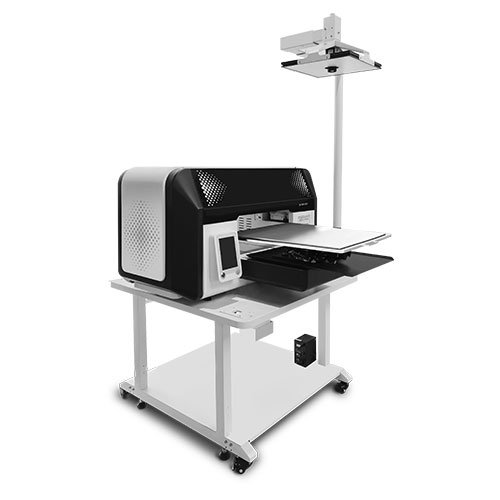
Its key specifications and features include:
Dual Epson i3200 Printheads
Two Epson i3200 printheads are specified, with an i3200HD option available.
Visual Positioning System
Designed for multiple processes and more flexible print-placement applications.
White + Color Simultaneous Printing
Supports an integrated white and color printing workflow.
400 × 500 mm Printing Area
Provides a practical working format for customized apparel applications.
Up to 25 mm Printing Thickness
Supports compatible textile applications up to the specified maximum printing thickness.
Automatic Ink Circulation
An adjustable circulation system is designed to reduce white ink blockage and simplify routine operation.
One-Click Ink Suction
Electronic ink suction helps simplify printhead cleaning and maintenance.
Together, these features make the SL-X1S relevant to businesses exploring not only conventional DTG production but also more creative multi-process garment decoration.
DTG or Embroidery? Choose Based on the Design
There is no reason to declare one technology the universal winner.
If you need detailed artwork, multiple colors, gradients, and digital flexibility, DTG printing may be the better choice.
If you need dimensional texture and the visual character of stitched thread, embroidery may be more suitable.
And if your product concept requires both?
Combine them.
The future of customized apparel does not have to be defined by choosing between printing and embroidery.
Designers can increasingly think in terms of ink + thread + fabric + texture + color.
That creates a much larger creative space.
Frequently Asked Questions
Is DTG better than embroidery?
Neither process is universally better. DTG is well suited to detailed and colorful digital artwork, while embroidery provides dimensional thread texture. The best option depends on the garment, design, production requirements, and desired visual effect.
Is DTG cheaper than embroidery?
Not necessarily. Production cost varies according to design complexity, garment, quantity, labor, printing settings, embroidery requirements, finishing, and other production factors. Cost should be evaluated for the specific product rather than the technology alone.
Can DTG print over embroidery?
Embroidery and digital garment printing can be combined as part of a mixed decoration workflow. Compatibility depends on factors including the garment, embroidery construction, printable surface, artwork, ink, and production setup.
The SL-X1S is positioned for integrated embroidery and printing applications and includes visual positioning for multi-process workflows.
Is DTG good for small orders?
Digital garment printing can be particularly useful for customized and short-run applications. The SL-X1S is specifically positioned for personalized customization, small-batch production, one-piece printing, and sample development.
Can I use DTG on denim?
The SL-X1S specifications list denim among its compatible textile applications. The brochure also presents denim clothing and jeans as potential product applications.
Can embroidery and printing be used on the same garment?
Yes. The two decoration techniques can form part of the same creative workflow, combining embroidered texture with digitally printed artwork.
Go Beyond DTG vs Embroidery
Why choose between color and texture when your designs can explore both?
The SL-X1S Visual Positioning DTG Printer opens new possibilities for custom apparel businesses looking to combine digital garment printing with embroidery-oriented creative workflows.
From personalized T-shirts and hoodies to denim, fashion samples, and limited collections, SL-X1S is designed to help turn more creative concepts into finished garments.
Explore Embroidery + DTG Printing
Discover how visual positioning can bring embroidery and digital printing together.